
Most of the dry eye patients we see have already spent years treating it themselves. They keep a bottle of artificial tears in every bag, switch brands when one stops working, and assume the gritty, tired feeling at 6pm is just part of modern life in New York.
Some of them are at least partially correct – their case of Dry Eye is mild, and good habits are enough. Many others aren't, though. Their symptoms come from inflamed or blocked oil glands in the eyelids, and no drop on the shelf (or better screen time management), fixes that. The hard part is that from the outside, both groups feel about the same.

That's why we built this Dry Eye Self-Assessment.
It takes about two minutes and gives you a score from 0 to 60, along with a straight answer: keep managing this at home, or come in and let us look.
What the quiz measures
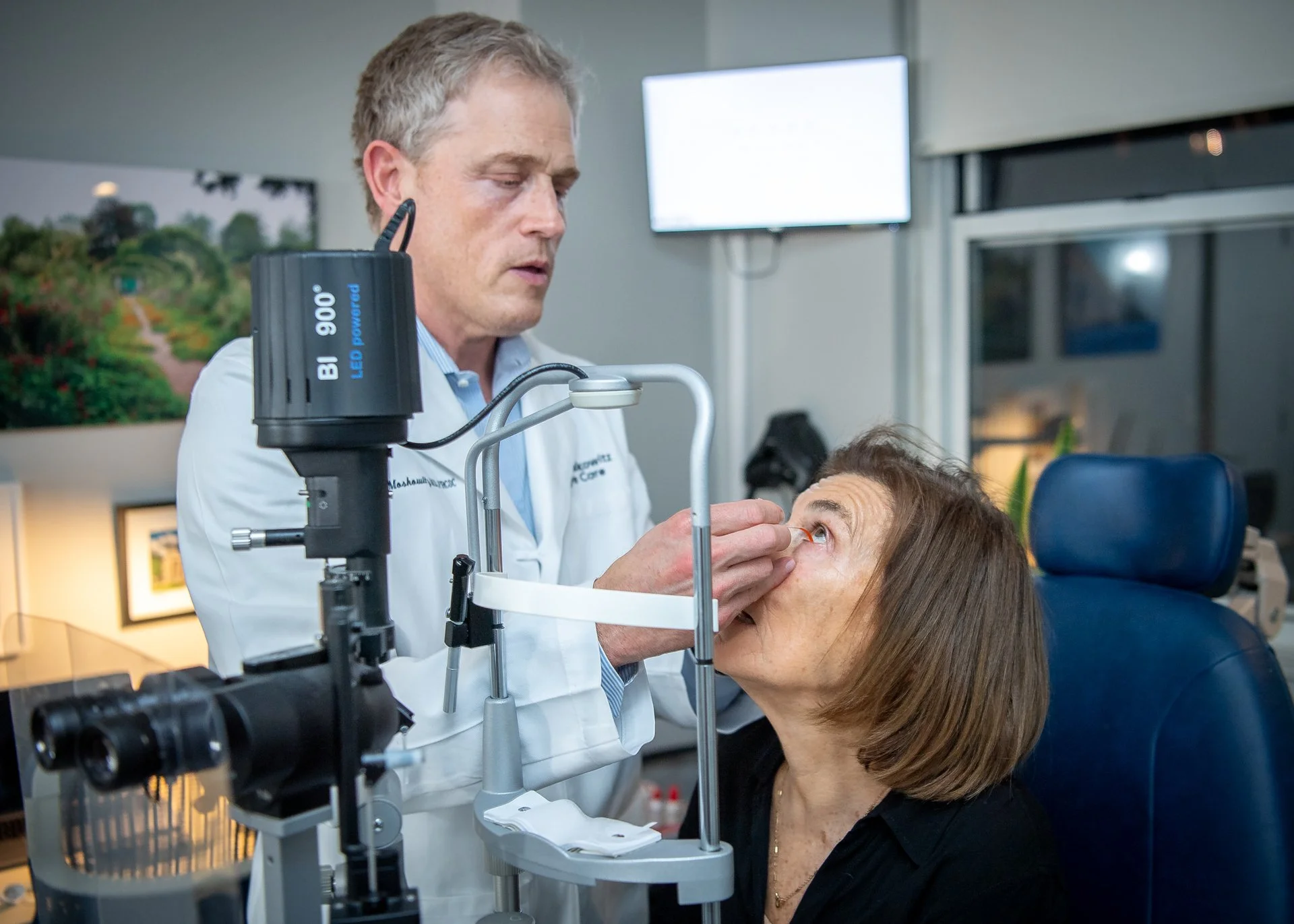
The questions are the same ones we ask at a dry eye evaluation. How often do you feel burning or grit? Does your vision blur and clear when you blink? Do symptoms build through the day, at the screen, in air conditioning, in contacts?
Every answer carries points, and the questions that best predict gland problems carry more. Symptoms that worsen by the end of the day count double, because that pattern is a classic sign of Meibomian Gland Dysfunction (MGD). So does your own rating of eye comfort.
Your total lands in one of three ranges:
You also see two sub-scores – one for dry eye symptoms, one for aesthetic concerns – so you know which side is driving the number.
Why drops aren't always the answer
Artificial tears add moisture to the surface of the eye. They don't reopen a blocked gland or calm the inflammation along the lid margin that causes MGD. Prescription drops go further, but most still work on the surface – we compared them in Miebo and Xdemvy vs. light therapy. Miebo, for one, has to be used continuously to keep working.
Punctal plugs have the opposite problem. They keep tears on the eye longer, along with the inflammatory debris those tears are supposed to clear. We explain why in Punctal Plugs vs. IPL.
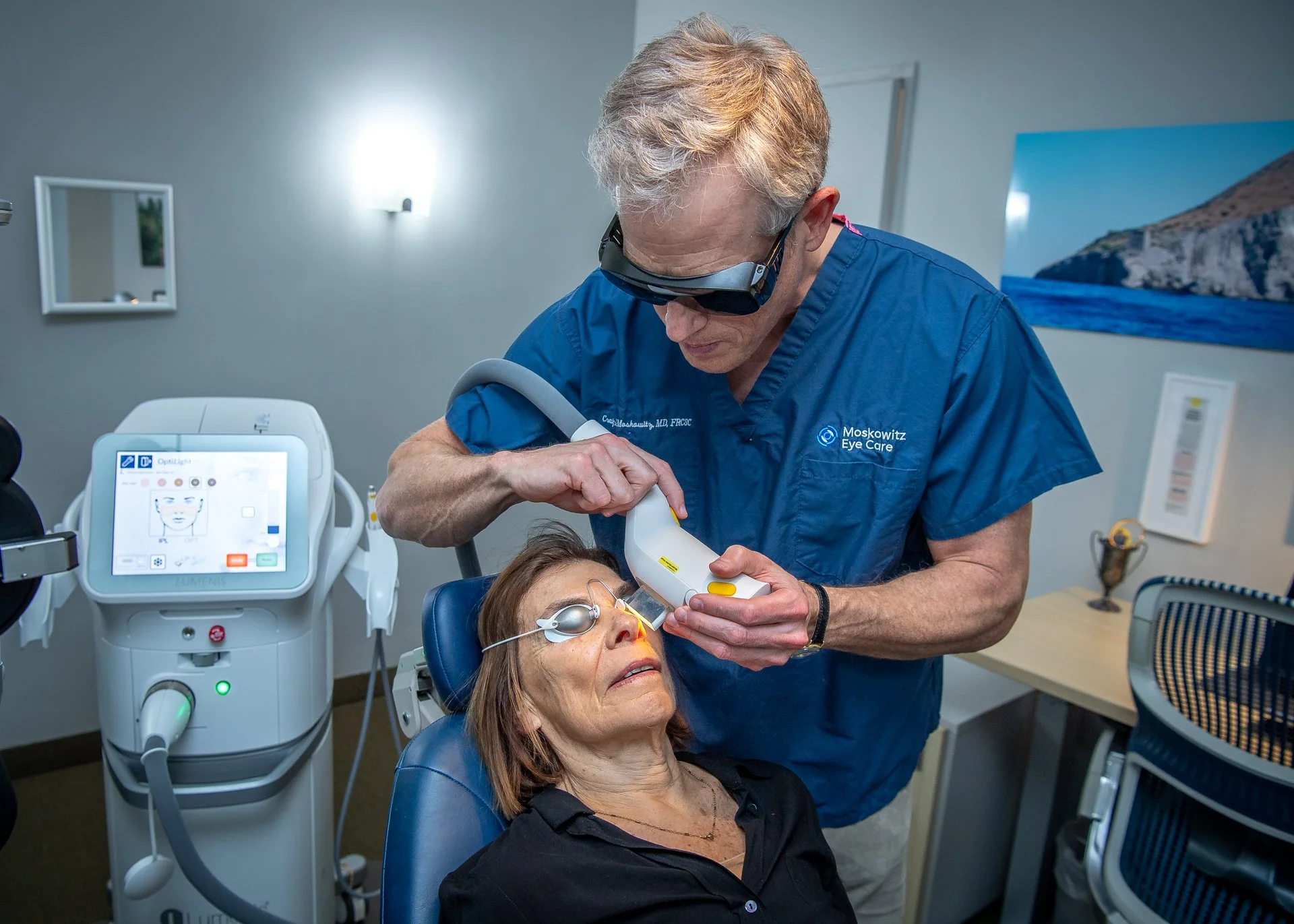
OptiLIGHT treats the upstream cause: inflammation, Demodex and the rosacea-related changes that shut the glands down. OptiLIFT strengthens the eyelid muscles, so your natural blink expresses oil better between visits. Our LipiFlow vs. OptiLIGHT + OptiLIFT post goes through how the two work together.
None of that means everyone needs a device. A low score is a good result, and the quiz says so plainly.
Why a dry eye quiz asks about your skin
Three of the seven questions ask about fine lines, sun spots, uneven tone and firmness around the eyes. That's deliberate.
The same IPL light that treats the lid margin also treats pigmentation and redness on the surrounding skin – it's the same technology behind a photofacial, delivered by an eye doctor who knows exactly how close to the eye it's safe to work. OptiLIFT's radiofrequency tightens the lower lids while its muscle stimulation improves the blink.
If you'd book a facial for those concerns anyway, it makes sense to treat them in the same sessions that treat your dry eye. We'd rather you know that going in.
How to use it
Take the quiz. Answer every question – skipped ones count as zero.
Read your result. If you scored low, start with the at-home steps; our eye care tips for New Yorkers cover the rest.
Print it. Your printout puts your score at the top, so we can start the visit where you left off.
Nothing you enter is submitted or saved – it stays on your device. The score is a screening guide, not a diagnosis; we confirm whether treatment is right for you at an in-person exam.
If you scored 15 or higher, book a dry eye evaluation and bring the printout.