
LipiFlow vs. OptiLIGHT IPL + OptiLIFT
Here's how to choose between two of the leading in-office Dry Eye Treatments in NYC
What is LipiFlow?
Lie back... a warm device clamps onto your eyelids... 12 minutes later you sit up, and someone tells you your glands have been expressed. That's LipiFlow.
It's the biggest name in thermal pulsation, and for good reason – it's FDA-cleared and well-studied.
But "thermal pulsation" with LipiFlow is really just heat plus a mechanical squeeze. It opens the gland for a moment, but it doesn't change why the gland closed in the first place, and it doesn't leave your eyelids any better at doing this work for themselves between visits.
Patients ask me about LipiFlow during Dry Eye Treatment consultations often, so let's walk through what the device is actually doing, and why we built our clinic around OptiLIGHT IPL and OptiLIFT instead.
What LipiFlow Does
The official name is Vectored Thermal Pulsation. Here's what's actually inside those 12 minutes: a single-use activator sits over each eye (a curved heating element against the inside of the lid, an inflatable bladder on the outside). The inner piece warms the meibomian glands; the outer piece inflates and presses, squeezing the softened oil out through the gland openings.
Most patients describe the activators as a tight, warm squeeze rather than anything relaxing. It's tolerable, but not pleasant.
Warming and expressing a clogged gland definitely helps. But bottom line, LipiFlow’s limitation is that it's a one-time mechanical event. It empties what's already sitting in the gland without asking why it got stuck there.
What OptiLIGHT (IPL) + OptiLIFT Do Differently
LipiFlow treats the gland in isolation, while we treat the system around it.
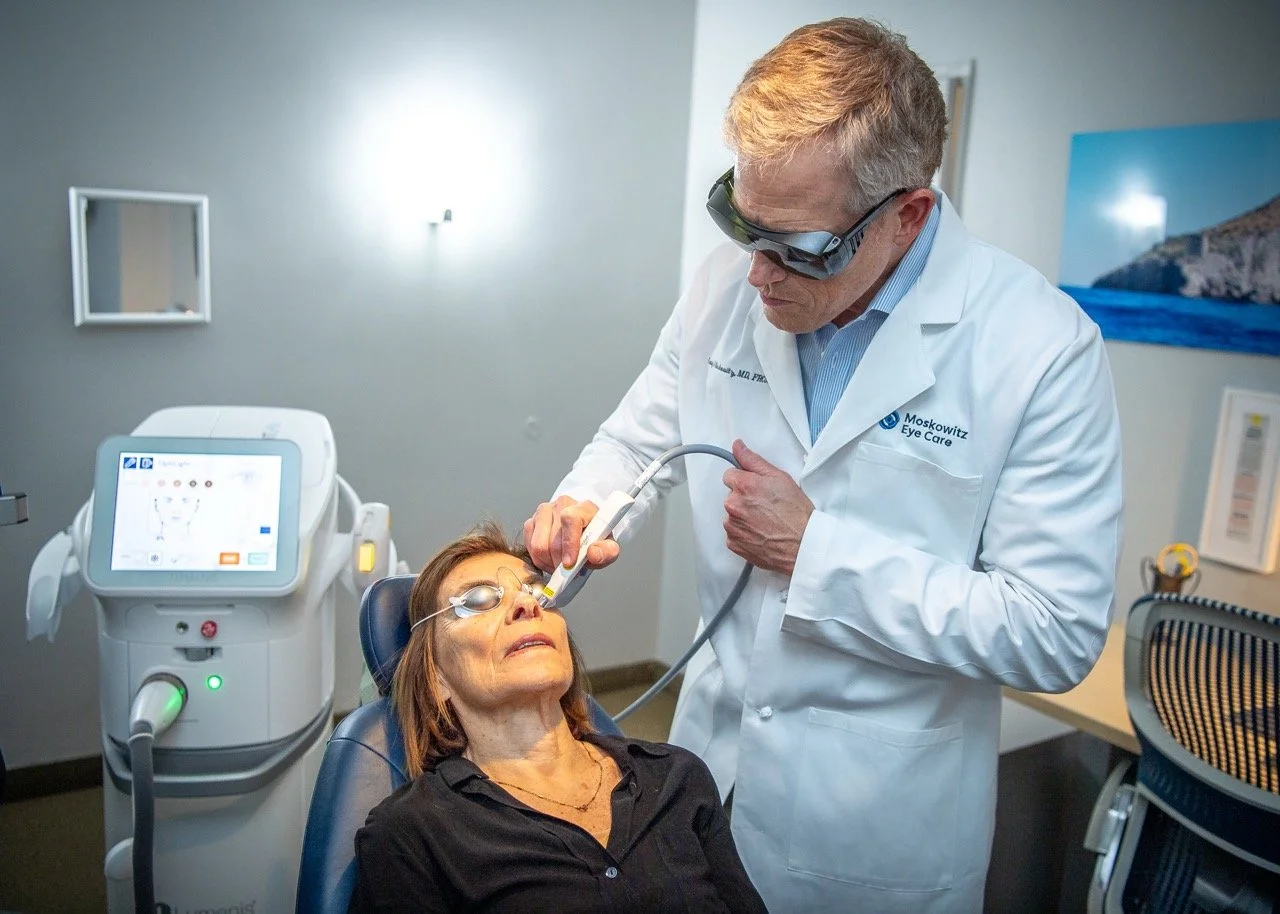
OptiLIGHT uses pulsed light, not just heat, applied to the skin beneath the eyes. As I've written about when comparing IPL to Miebo and Xdemvy and when comparing it to punctal plugs, light treats what's actually narrowing the gland in the first place — inflammation along the lid margin, the abnormal blood vessels of ocular rosacea, and Demodex mites, which are a far more common culprit than most patients realize.
LipiFlow can’t do the same thing. It can express a clogged gland just fine, but if rosacea or Demodex is what clogged it, the gland starts narrowing again and the same symptoms will present before long.
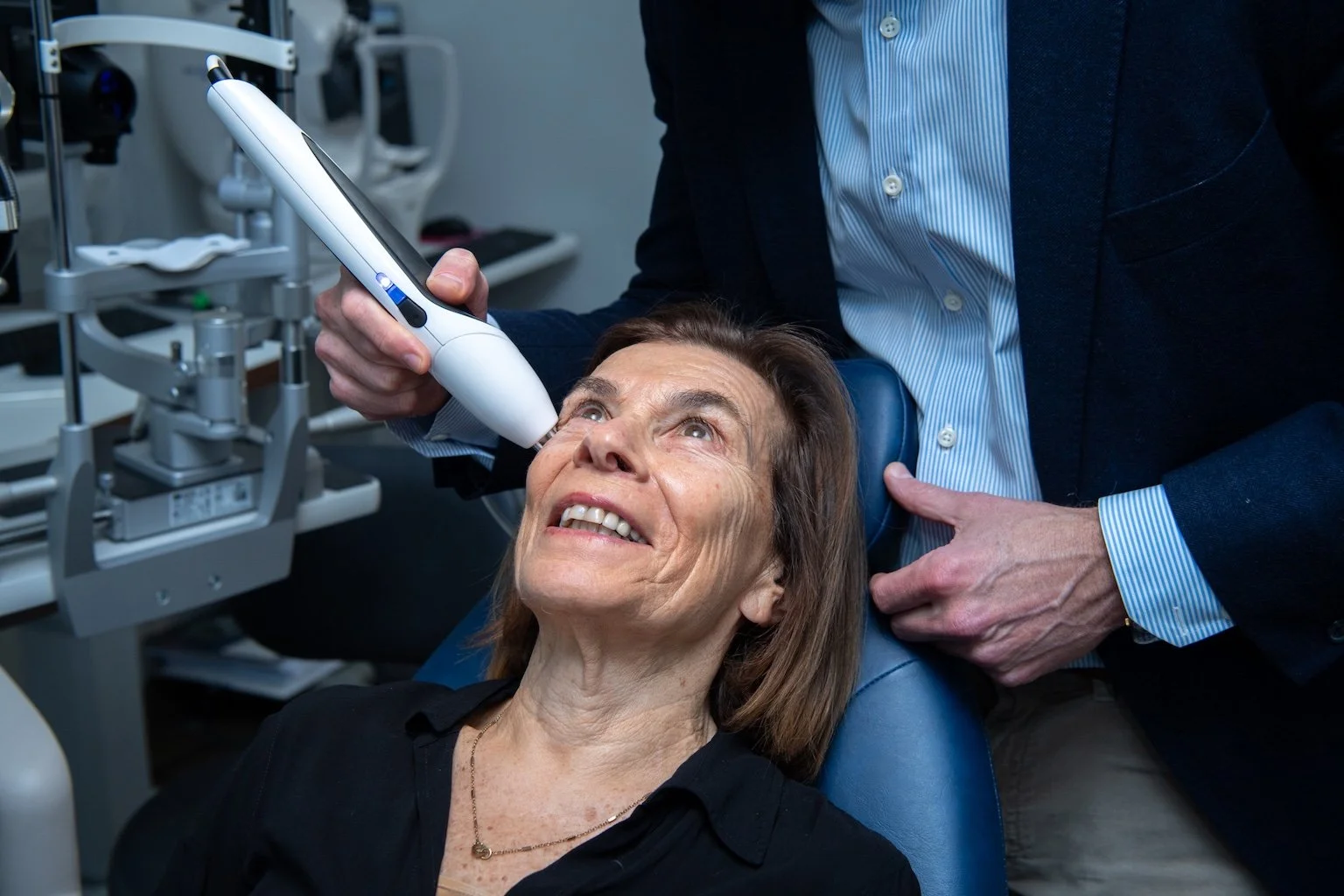
OptiLIFT is the part LipiFlow doesn't even attempt. It uses muscle stimulation and radiofrequency to strengthen the eyelid muscles and improve blink mechanics. I know that may sound like a small thing — but meibum isn't only released by squeezing it out in a treatment chair. It's released, continuously, by the pressure of a normal, complete blink. Most of my patients have a weak, shallow blink from years of staring at screens, and their glands simply aren't being emptied the way they're supposed to be, day after day. Strengthen the lid, and the blink starts doing that work again — for free, every day, without a machine.
These differences matter because LipiFlow gives you just “one good squeeze.”
OptiLIGHT and OptiLIFT change whether your glands stay open and your blink keeps working between visits.
One treatment / procedure resets the gland. The other fixes the conditions that clogged it.
Why We Didn't Build Our Clinic Around LipiFlow
LipiFlow does exactly what it's designed to do. My issue is with where it stops. "Squeeze the gland and send the patient home" isn't where I think good dry eye care should end, especially when the squeeze doesn't last.
It's the same reasoning behind why we expanded our Manhattan dry eye clinic around OptiLIGHT and OptiLIFT in the first place. And it's part of why OptiLIFT has quietly become a non-surgical alternative for patients weighing blepharoplasty — the same lid-strengthening mechanism that helps your dry eye also happens to improve how your eyes look.
Ready to Treat the Cause?
If you've tried warm compresses, drops, or even a LipiFlow session and you're still managing symptoms instead of seeing real improvement, it's worth looking upstream – at the inflammation, the Demodex, and the blink itself.
Live in NYC? Schedule a consultation and we'll evaluate whether OptiLIGHT and OptiLIFT are the right next step for your eyes.