
Droopy Eyelids? There’s a Non-Surgical Alternative to Blepharoplasty
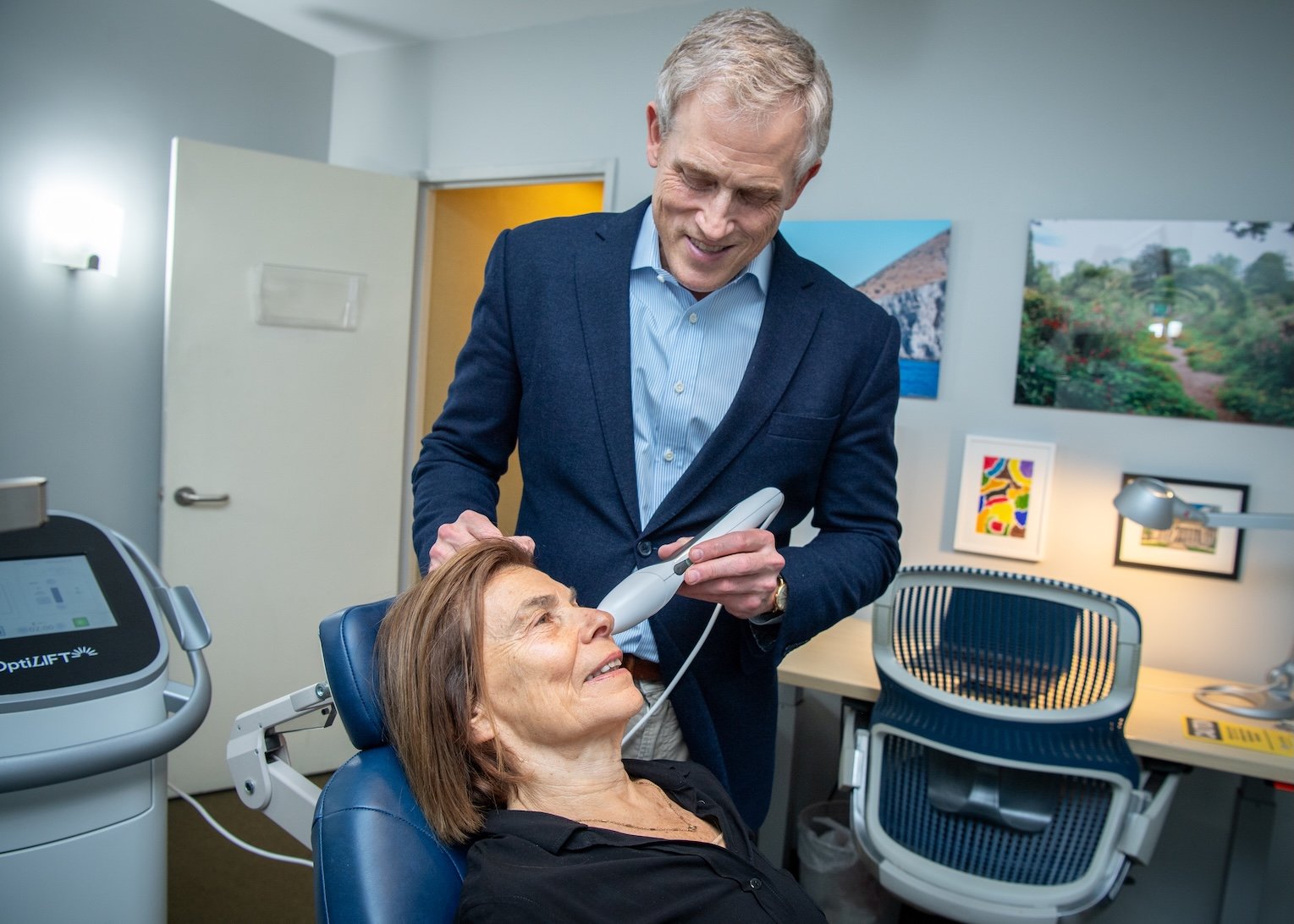
You’re far from alone in thinking your eyes always look tired, even after a full night’s sleep.
Drooping eyelids are incredibly common, especially as we age. And while they certainly affect appearance, they can also impact how your eyes function and how comfortable they feel throughout the day.
Some patients who describe this “tired” look are experiencing early ptosis, a mild lowering of the upper eyelid due to muscle weakness or stretching. Ptosis can subtly affect both appearance and function long before it becomes severe enough for traditional surgical repair.
As board-certified dry eye specialists in New York City, we regularly see patients who are bothered by heavy or sagging lower lids but aren’t ready (or willing) to commit to getting surgery.
That’s where OptiLIFT™, a non-surgical treatment for sagging eyelids, comes in.
Why Eyelids Start to Sag
Over time, the muscles and connective tissue around the eyes naturally lose tone. Blinking becomes less complete, the lower lids may begin to sag outward, and the under-eye area can look puffy or crepey.
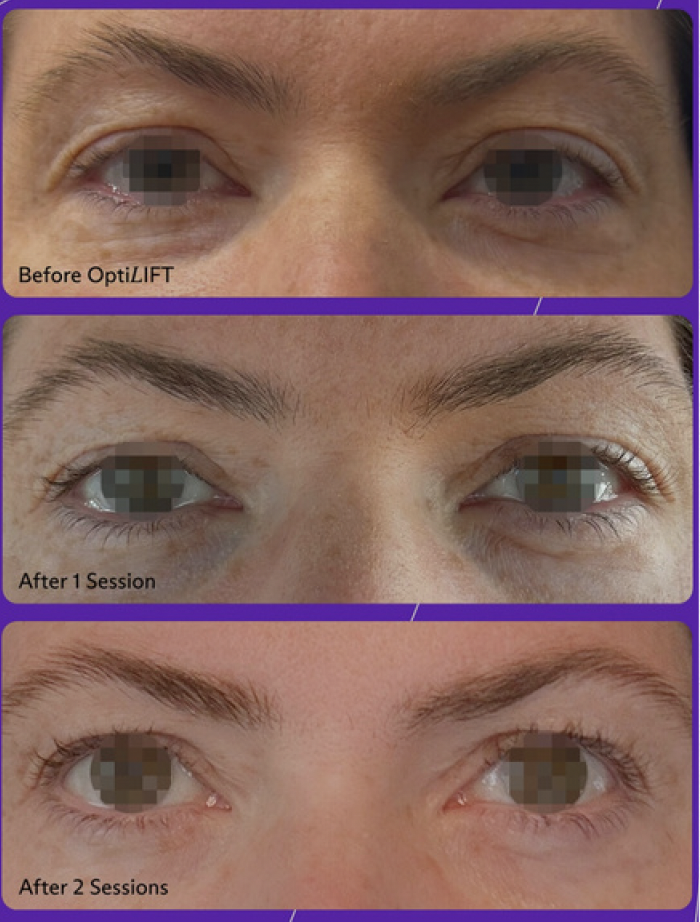
For some people, ptosis contributes to the droopy appearance, especially when the lid margin sits significantly lower than normal.
What many people don’t realize is that eyelid laxity isn’t just cosmetic. When eyelids don’t blink efficiently:
Tears don’t spread evenly across the eye
The tear film breaks down faster
Dry eye symptoms worsen, especially late in the day
That’s why saggy lids and chronic dry eye often go hand in hand.
The Traditional Approach: Blepharoplasty (Eyelid Surgery)
Blepharoplasty can be an effective solution for significant eyelid drooping, but it’s also:
A surgical procedure
Associated with recovery time and swelling
More expensive
Not necessary for mild-to-moderate lid laxity
Many patients come to us asking: “Is there a less invasive alternative I can try first?”
OptiLIFT Muscle Stimulation
OptiLIFT is a non-surgical, in-office treatment designed to gently strengthen the muscles around the eyes and improve eyelid tone and blink mechanics.
Using Dynamic Muscle Stimulation, OptiLIFT helps:
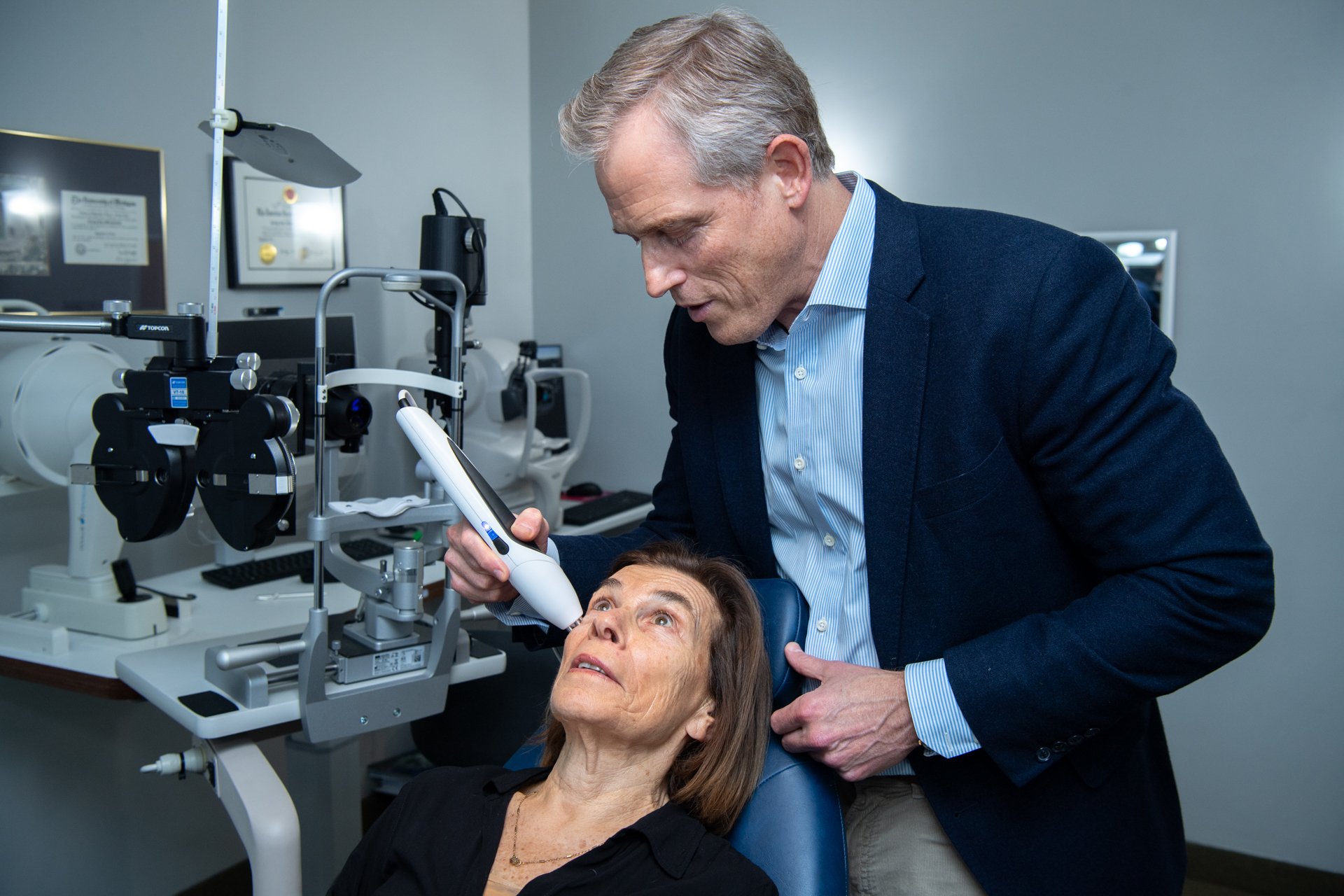
Improve eyelid muscle support
Enhance blink quality
Reduce lower lid laxity
Improve tear distribution across the eye
Patients often notice not only better comfort, but also a subtle lifting and smoothing effect around the lower eyelids — refreshed and natural, not “overdone.”
OptiLIFT is particularly helpful for mild ptosis and eyelid laxity, where the goal is strengthening the muscle that lifts the eyelid and improving blink mechanics without the need for incisions or surgical recovery.
There are no incisions, no injections, and no downtime.
OptiLift vs. Blepharoplasty: A Quick Comparison
Why We Offer OptiLIFT
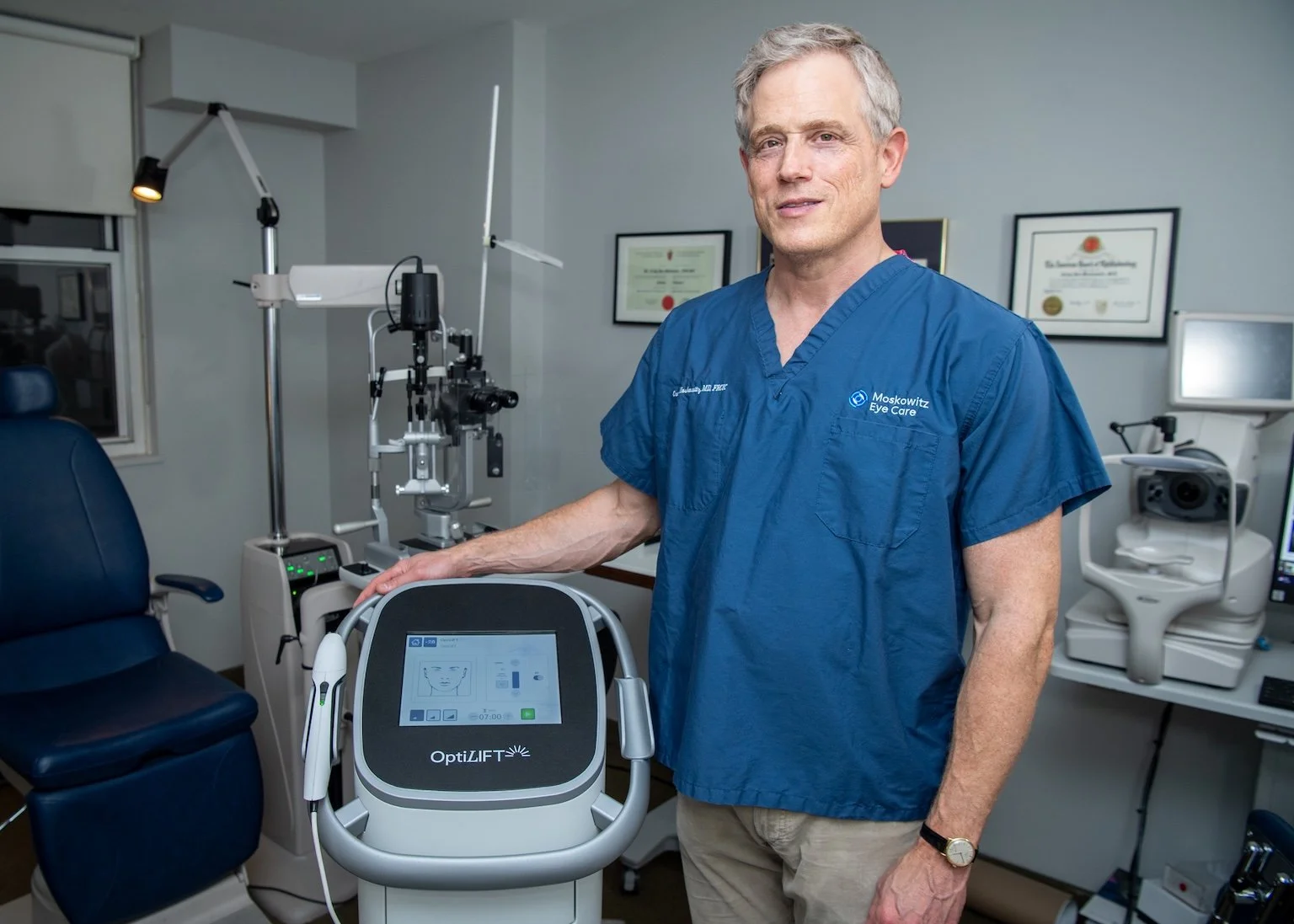
We’ve always taken a conservative, safety-first approach to eye care — whether it’s laser vision correction, dry eye treatment, or aesthetics.
Our philosophy is simple: Use the least invasive option that can safely and effectively help the patient.
OptiLIFT is an excellent alternative to blephs surgery for most people and aligns perfectly with that mindset.
Is OptiLIFT Right for You?
If you live in the New York City area and you’re noticing:
Sagging or droopy lower eyelids
Eyes that look tired even when you feel fine
Dry eye symptoms that worsen throughout the day
OptiLIFT may be worth exploring. A consultation in our Upper East Side clinic allows us to evaluate your eyelids, blinking, and tear film — and determine whether OptiLIFT, another treatment, or a combination approach makes the most sense.