
Comparing Miebo and Xdemvy to Light Therapy
You’ve probably found yourself watching TV recently wondering, “So what’s with all these eye drop commercials?”
Valid observation – it’s not just you!
The makers of Miebo and Xdemvy spent millions upon millions on national campaigns advertising these products in 2025. Keep scrolling to watch a couple of their placements! Chances are we’ll see one of these during the Super Bowl this Sunday.
There’s a good reason they’re spending so much money to promote these prescription eye drops. That’s because Dry Eye Disease (DED) / Dry Eye Syndrome and blepharitis have become increasingly prevalent and diagnosed problems in America and around the world.
Where Miebo Fits In
For most patients, Meibomian Gland Dysfunction is the cause of DED.
Tiny meibomian glands along the eyelids are responsible for producing the lipid (oil) layer of the tear film — the layer that keeps tears from evaporating too quickly. When the glands become blocked or inflamed, symptoms follow: burning, fluctuating vision, redness, tearing and eye fatigue.
Miebo works by creating a synthetic lipid layer on the surface of the eye. In essence, it temporarily replaces the oil layer that dysfunctional glands aren’t producing well.
For many patients, Miebo can help because:
It tends to improve tear stability
It tends to reduce evaporation
It can bring meaningful symptom relief
So Miebo can certainly be a solid option for patients who need ongoing surface support, especially when gland function is limited or when other treatments aren’t feasible.
That being said, however, Miebo doesn’t reopen blocked glands — so continued use is typically required to maintain benefit.
Where Xdemvy Fits In
Xdemvy targets Demodex mites, a common and under-diagnosed contributor to eyelid inflammation, itching, redness, and recurrent styes.
It’s an effective, well-studied option for blepharitis that many patients do very well with.
Treatment involves:
Drops twice daily
For six weeks
With consistent compliance
For patients with confirmed Demodex involvement, Xdemvy can be great solution.
How OptiLIGHT Is Different
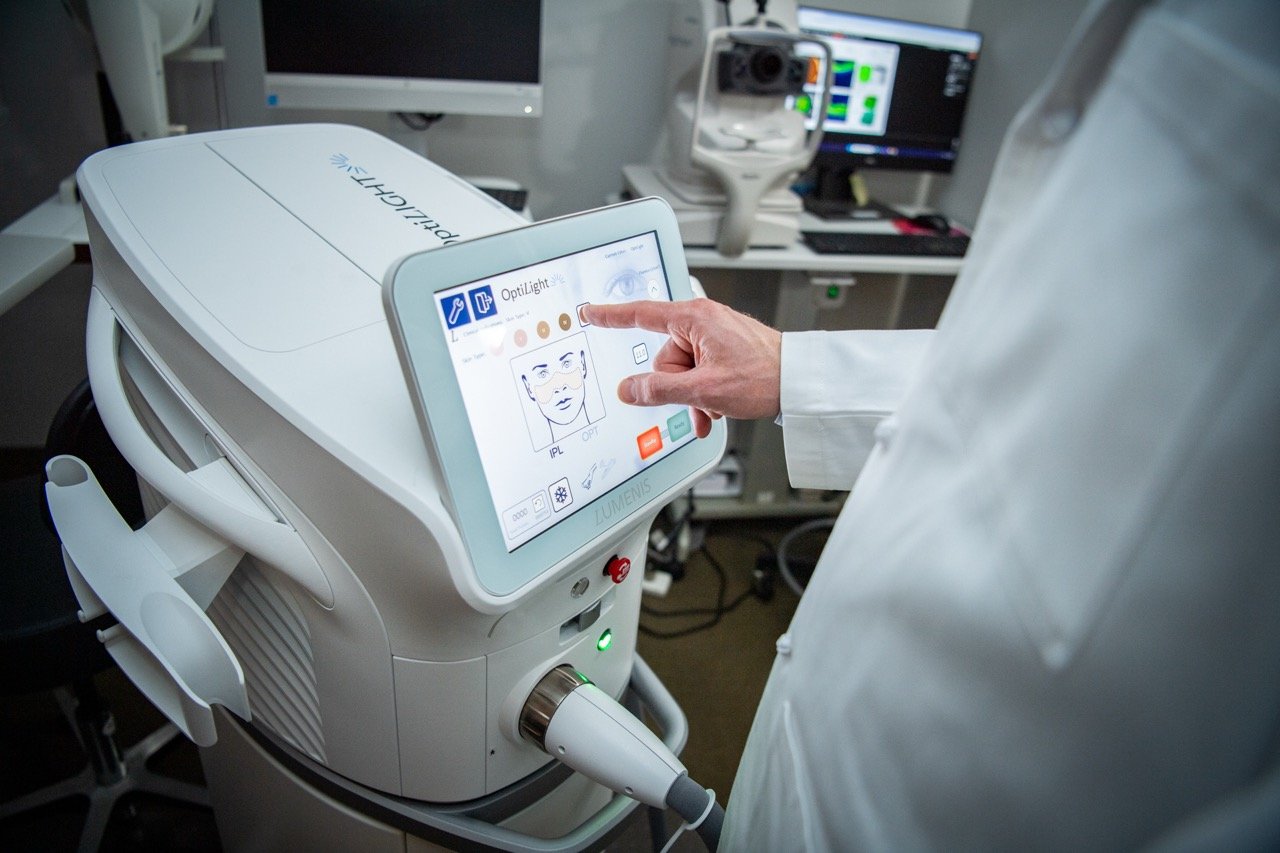
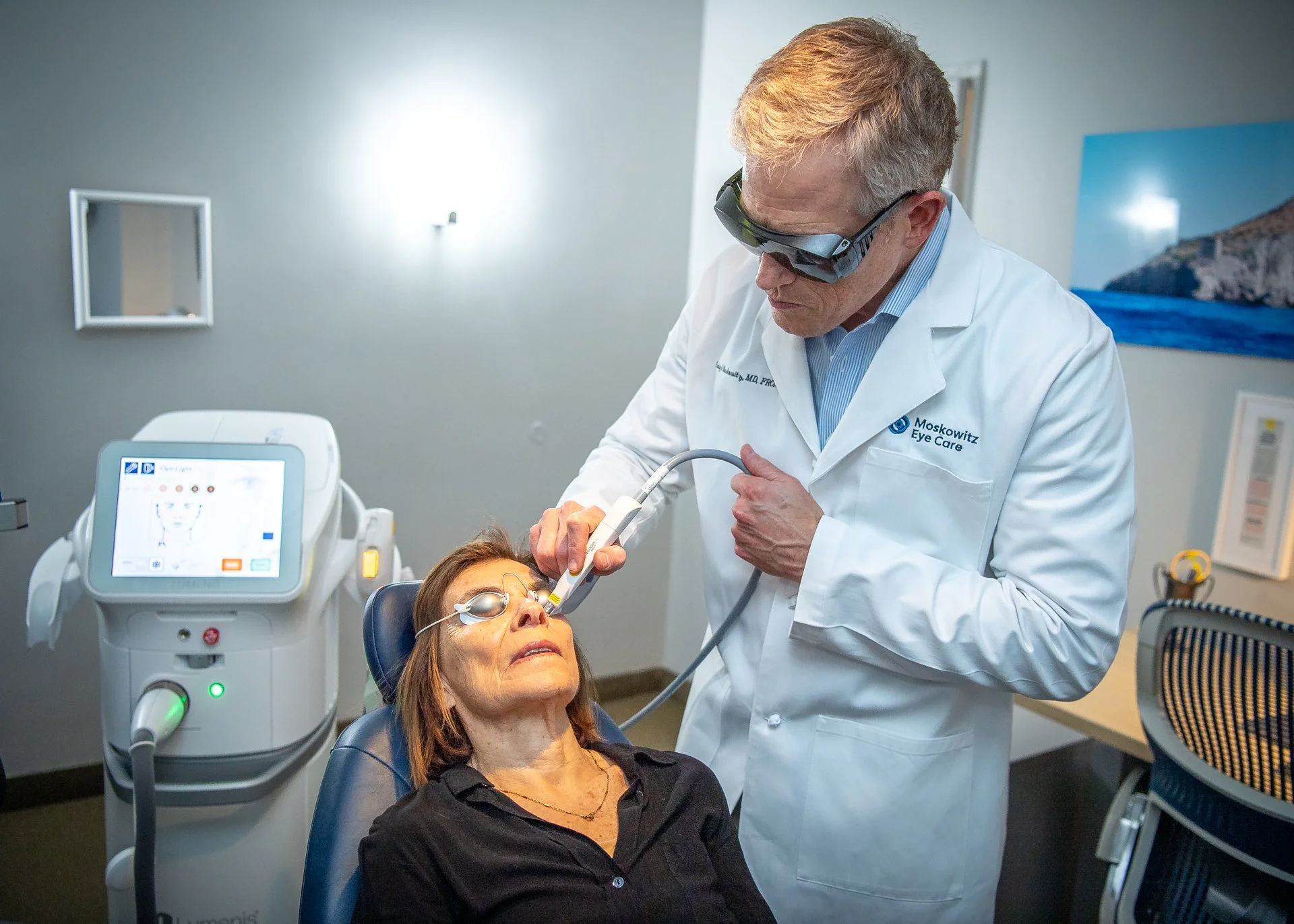
OptiLIGHT IPL takes a more fundamental approach. Rather than replacing the oil layer or targeting a single factor, pulsed light therapy around a patient’s eyes accomplishes the following:
Opens blocked meibomian glands
Reduces eyelid and skin inflammation
Improves abnormal blood vessels associated with ocular rosacea
Encourages eyelids to produce a healthier, more natural lipid layer
Reduces or eliminates Demodex mite populations using heat and light energy, while simultaneously improving overall eyelid health
For many patients, OptiLIGHT offers a more durable, long-term improvement, often reducing reliance on drops over time.
A Personalized, Safety-First Approach
We take a conservative, individualized approach to dry eye care. That means choosing the right tool — or combination of tools — for each patient, rather than a one-size-fits-all solution.
If you’re wondering which option is best for your eyes, the answer probably isn’t going to be found in a commercial. It’s in a thoughtful evaluation of your glands, eyelids, tear film, and symptoms.