
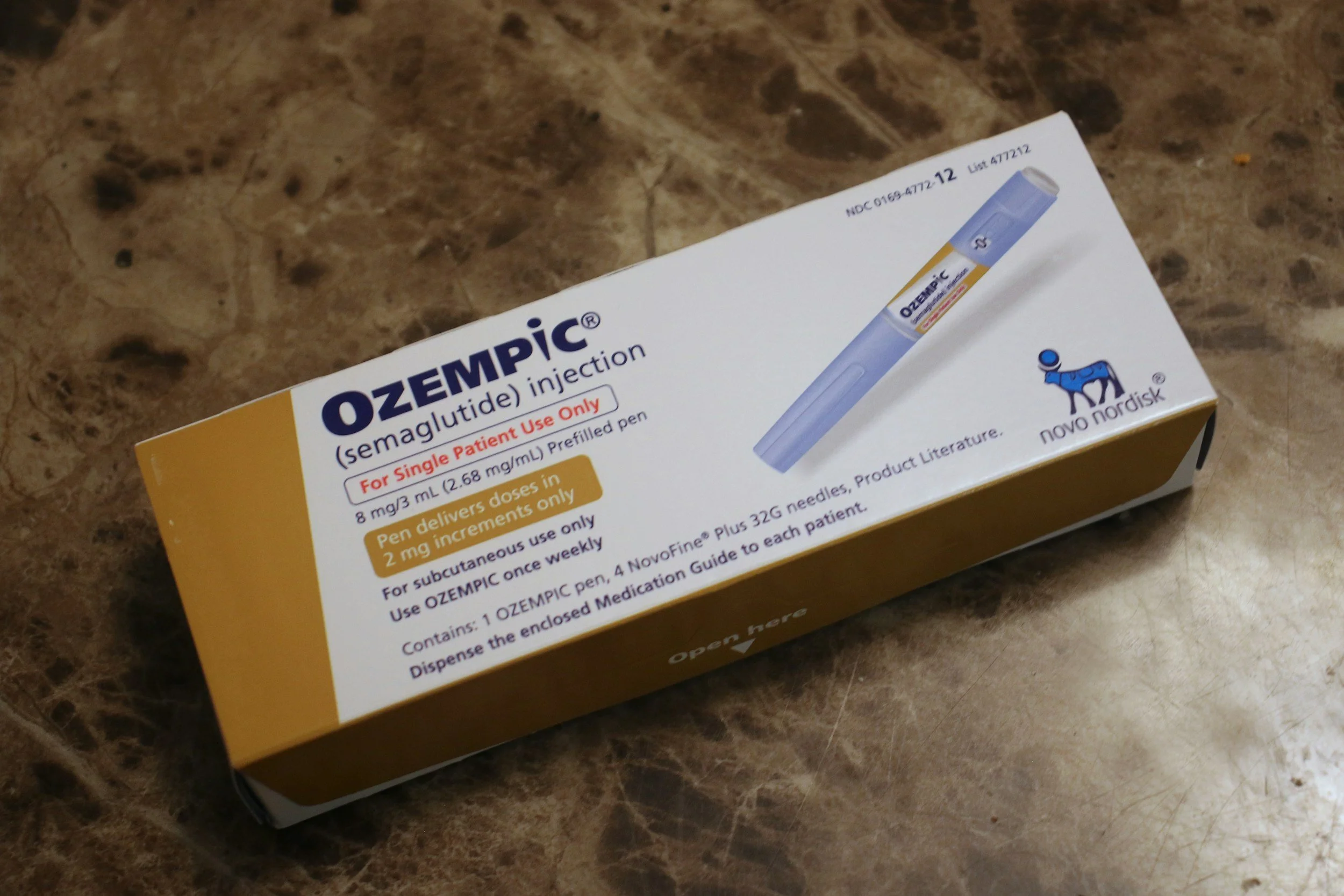
A handful of my long-time patients have lost serious weight on Ozempic, Wegovy and Mounjaro. They feel great and their blood work looks better. But then they catch themselves in a mirror and see someone older and more tired than they actually feel.
Unfortunately, that’s Ozempic Face: hollow cheeks, deeper folds, loose skin along the jaw, and a sunken look under the eyes. It’s common enough that searches for the term jumped 4,600% between 2021 and 2024. In one survey of 504 GLP-1 users, 38.7% reported skin changes, most often facial volume loss, sagging and jowling.
To be clear, the weight loss is the win. I’m not here to talk anyone off a medication that’s working. But the face deserves a plan of its own.
The part nobody mentions: you’re losing muscle, too
Most coverage treats Ozempic Face as a fat problem. Lose weight fast, the fat pads in your cheeks and temples shrink, and the skin has nothing underneath it. That’s true, but it’s only half the picture.
In the landmark STEP 1 trial of semaglutide, body scans showed that about 39% of the weight participants lost was lean mass, not fat. Those scans can’t perfectly separate muscle from water and other tissue, but the direction is clear. When the scale drops quickly, muscle goes with it.
Enter the core problem of Ozempic face: your face is held up by muscle. After 30, we already lose 3 to 5% of our muscle mass per decade. Rapid weight loss adds to it. The muscles that support your cheeks, jawline and lower lids weaken, and everything above them settles.
That’s why filling the hollows alone often disappoints. You’re adding volume on top of a foundation that’s still giving way.
Rebuild the foundation first
That’s the problem triLift is built to address. It works on three layers in one session:

Muscle: Dynamic Muscle Stimulation contracts your facial muscles end to end, harder than you can voluntarily. It’s strength training for muscles you can’t take to the gym.
Skin: Radiofrequency heats the deeper layer of the skin to tighten it and soften lines.
Volume: Microneedling electrodes about the width of a hair stimulate your own collagen, elastin and hyaluronic acid, which helps thin, deflated skin look fuller.
No filler, no incisions, no downtime. A series is typically 4 to 6 weekly sessions of 20 to 30 minutes, and you go straight back to your day. Here’s how triLift works in more detail.
For GLP-1 patients, rebuilding muscle and skin quality gives a far more natural improvement than adding volume on top. And because triLIFT works with your own tissue, you avoid the overfilled “pillow face” that comes from chasing every hollow with a syringe.
Why the eyes give it away first
The skin around your eyes is the thinnest on your face, with very little fat to spare. When volume drops, the under-eye area is often where people notice it first: deeper hollows, darker shadows, and a lower lid that looks looser than it used to.
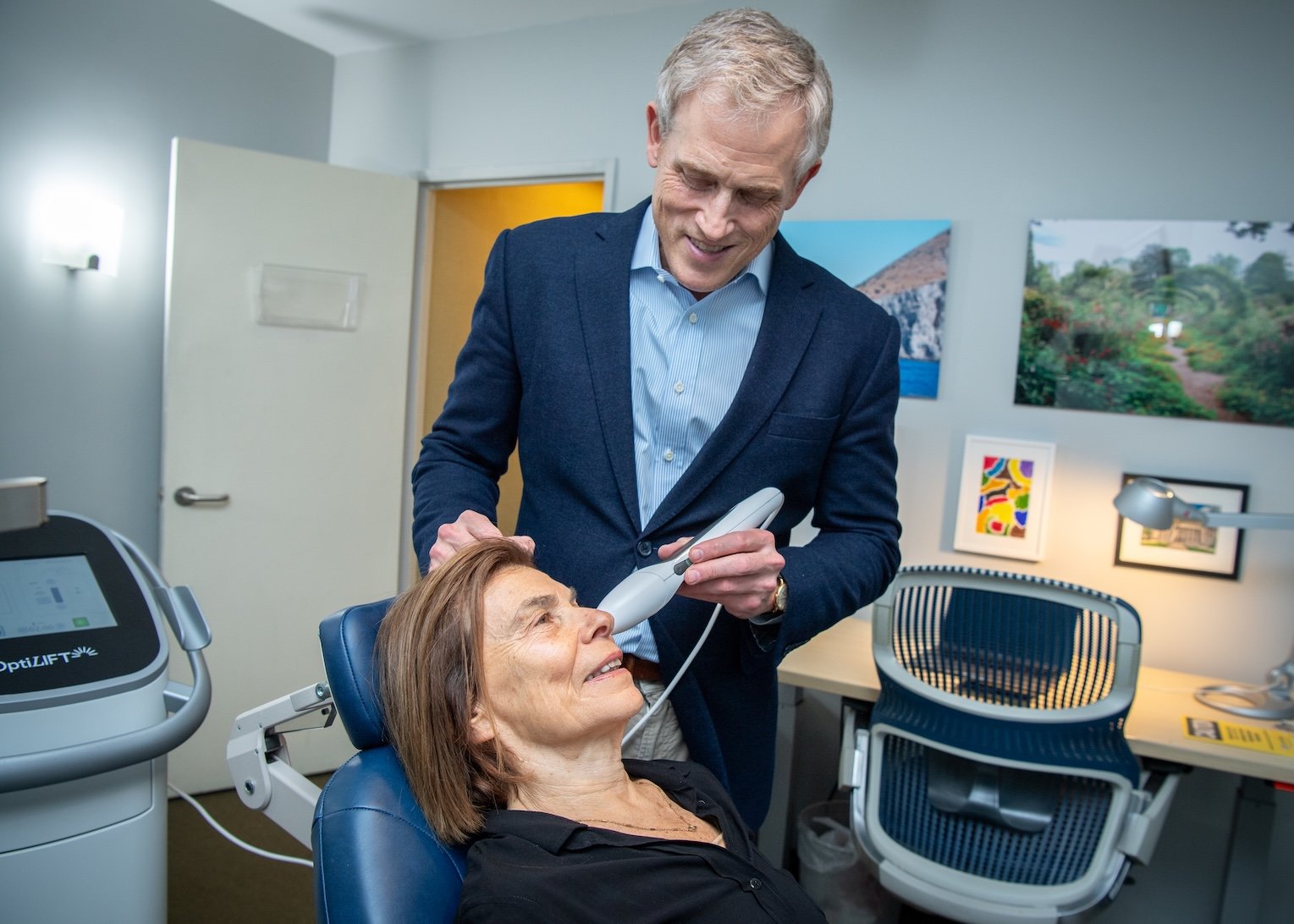
That’s my territory. In a peer-reviewed study of the same muscle-stimulation technology used around the eyes, the share of patients with lower lid laxity dropped by roughly 77% one month after treatment. For patients whose lids are also affecting their blink or comfort, I often pair triLift with OptiLIFT. I’ve also written about how radiofrequency firms the delicate lower lid.
When to start – and what a facelift really costs
You don’t need to wait until you hit your goal weight. Building muscle tone while you’re still losing can help the face keep up with the rest of you. We’ll plan maintenance sessions around where you are in your journey, the same way you’d keep up any strength routine.
Many GLP-1 patients assume a facelift is where they’ll end up. In New York City, surgeons quote anywhere from $25,000 to more than $100,000 for one, before you count anesthesia risk, weeks of recovery and time off work. And a facelift pulls skin tighter. It doesn’t rebuild the muscle you’ve lost.
triLift costs a fraction of that, with no anesthesia and no downtime. The improvement comes from your own muscle and collagen, so the result looks like you – just more rested.
Lost the weight, but not happy with your face? Book a consultation at our Upper East Side office.