
How We Went Viral on LASIK TikTok
Reflecting about the time we got three million views and what it revealed about tracking and virality on the social web
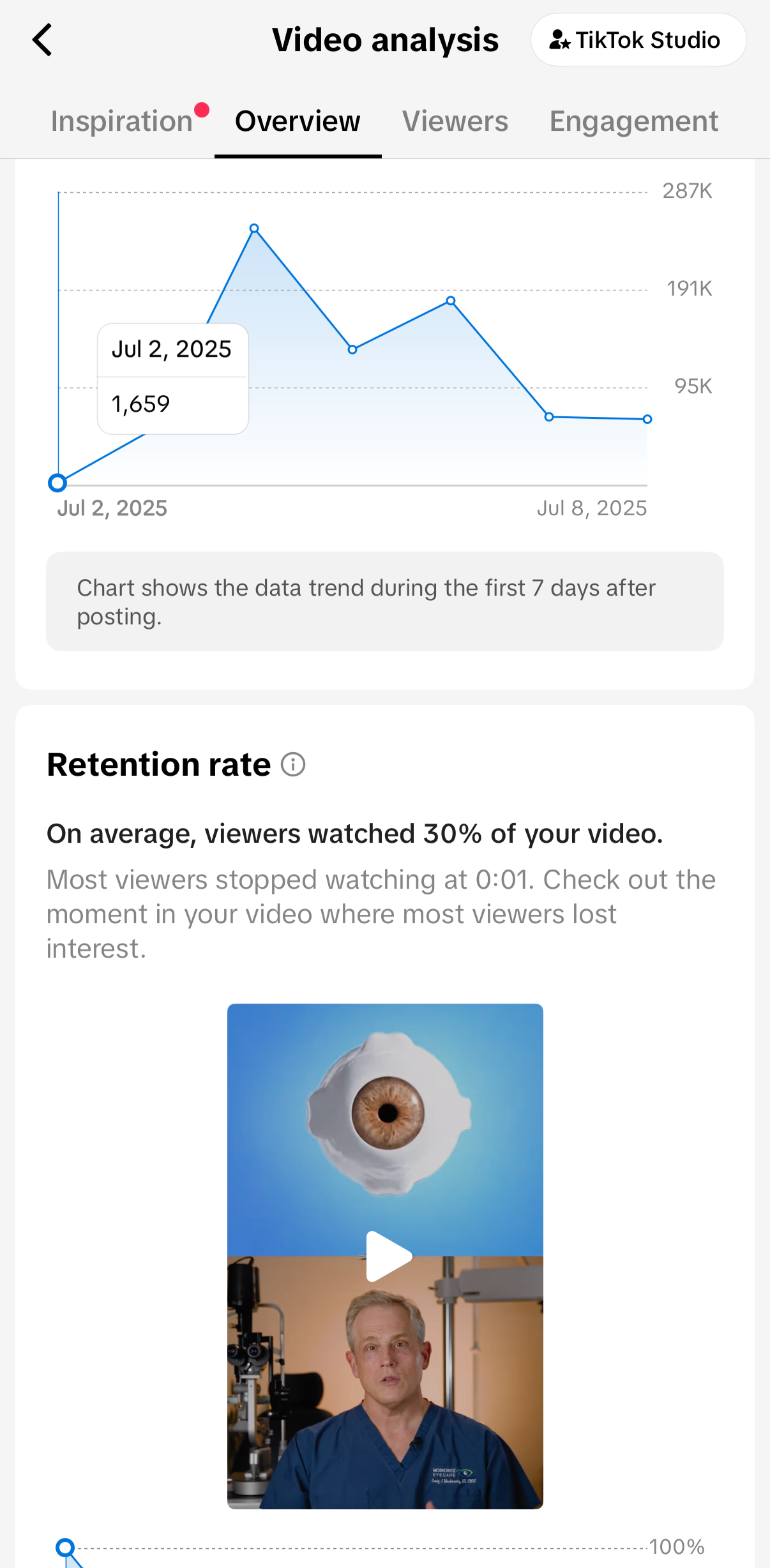
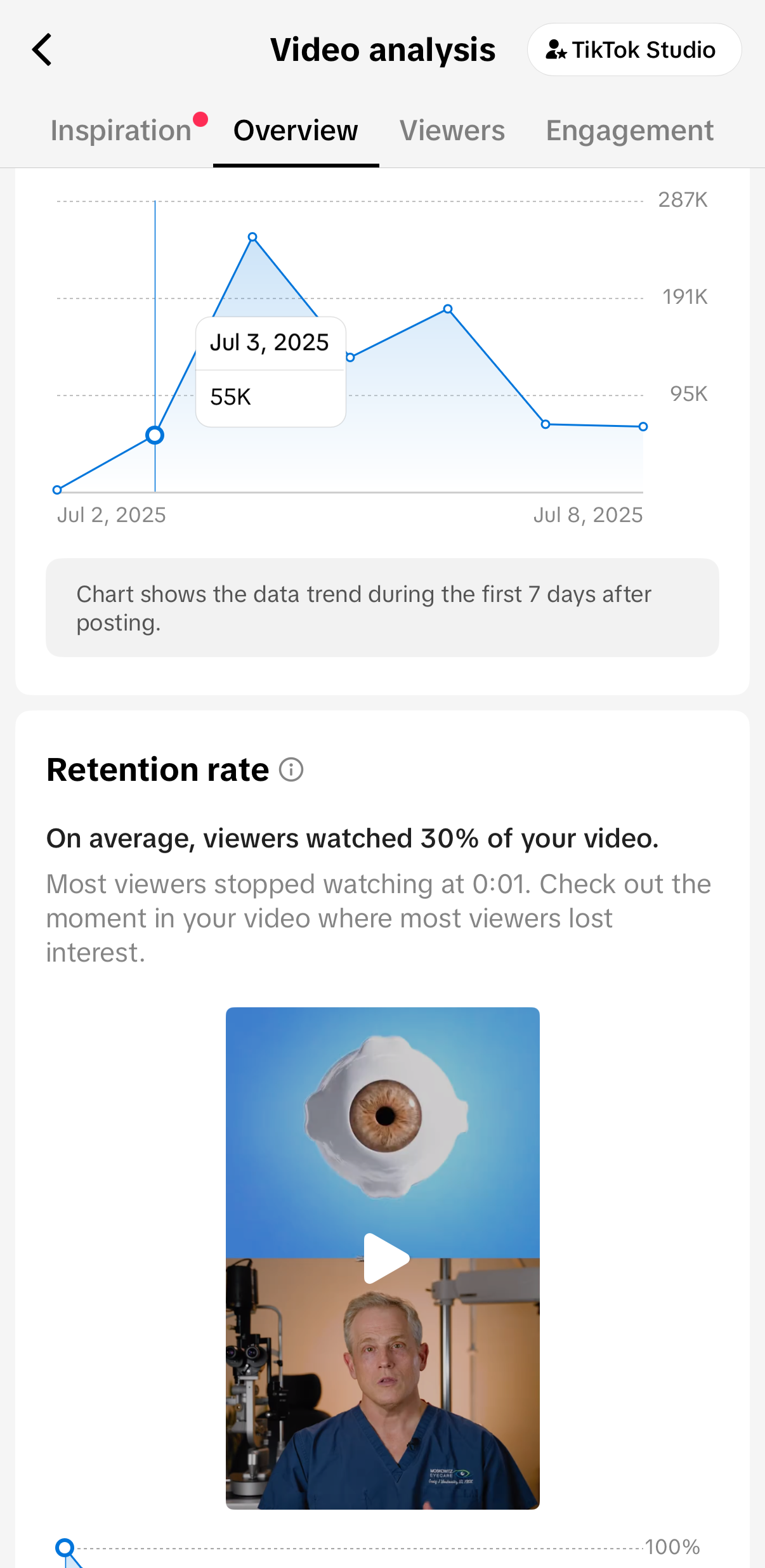
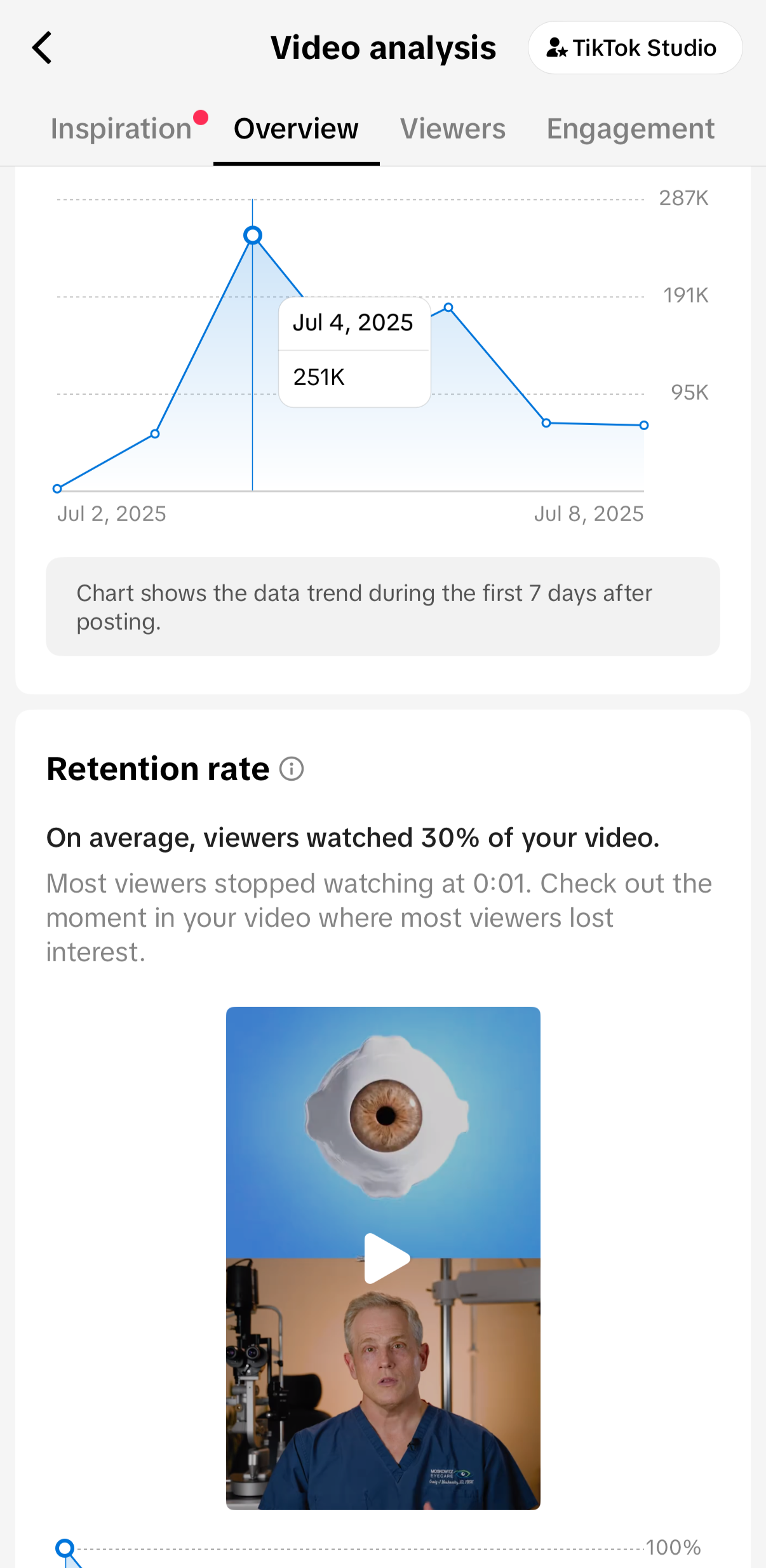
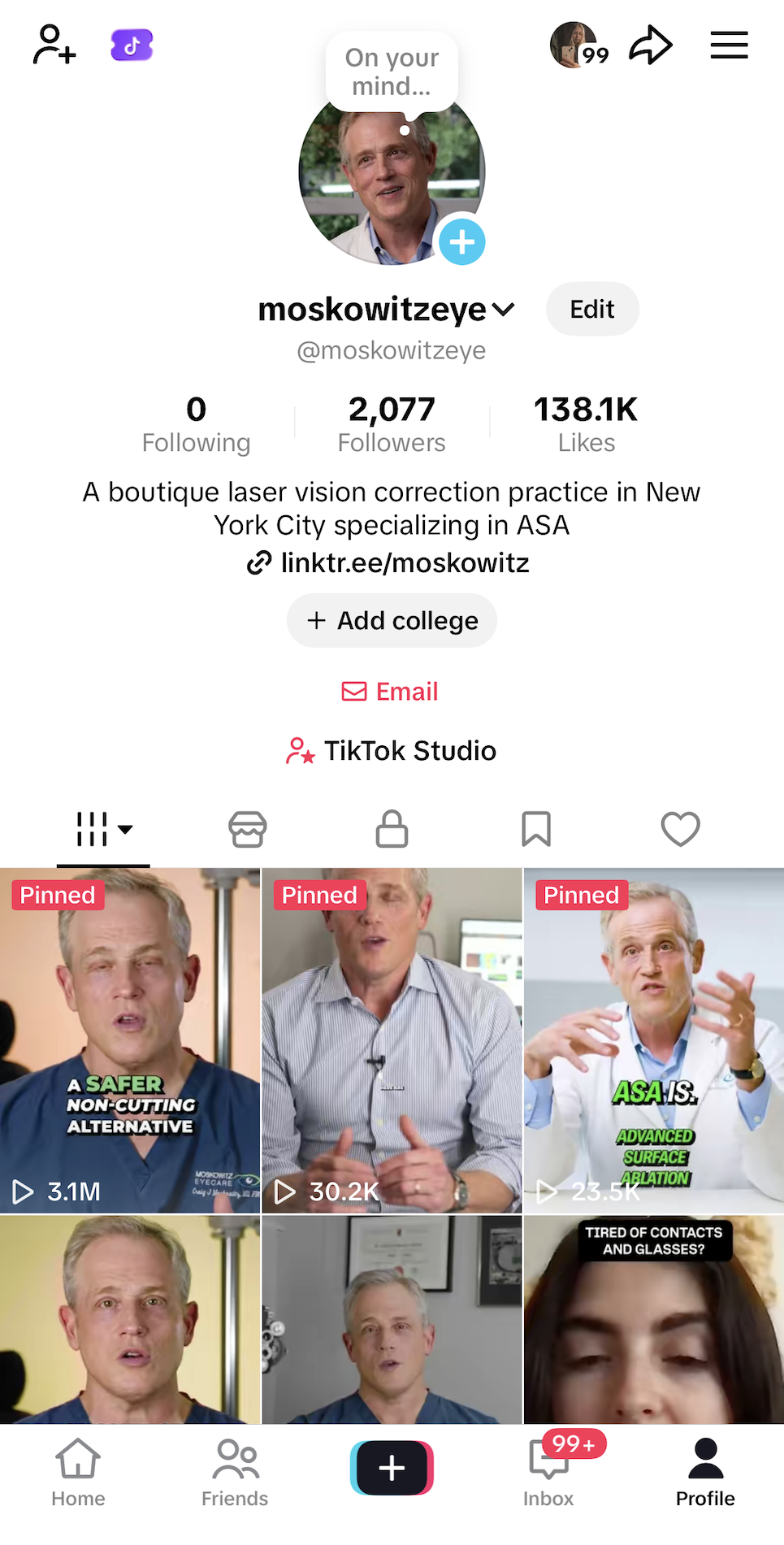
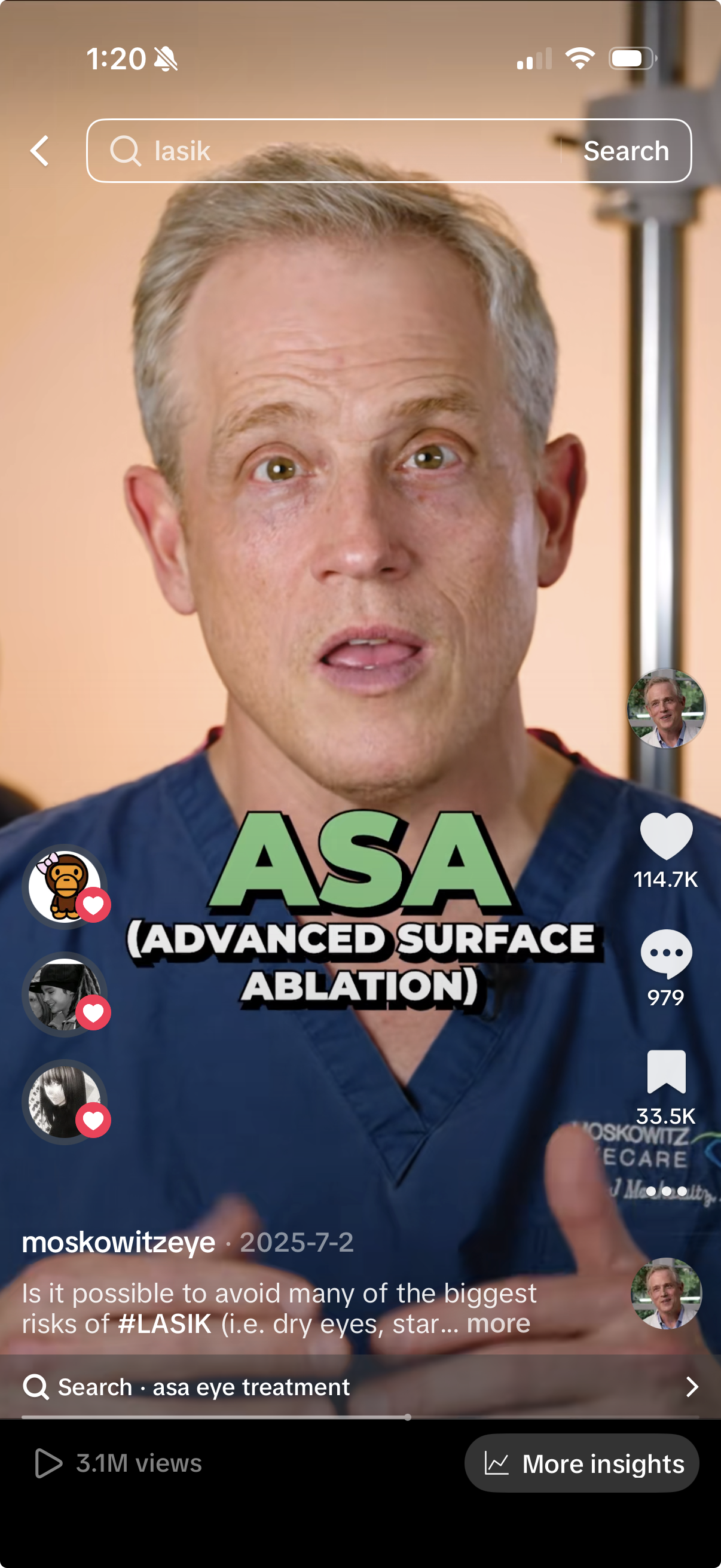
Believe it or not, *this* video notched over two million organic views in under two weeks in July 2025 (and since then, it’s gained an additional million+ views).
Note: if the embedded TikTok doesn’t work, you can watch it on YouTube
I wish I could tell you the reason this happened was because of my brilliant delivery or some genius content strategy (on the contrary, hundreds of TikTok commenters concluded I was AI…).
If I’m being honest with you, it is an extremely dry video by social media standards.
It was originally produced for us to use as a boosted ad on Instagram in order to educate people about LASIK vs. ASA in a pithy format. We’ve made *way* better organic videos that were engineered for potential virality.
But not this one. There’s no pre-existing trend that we piggybacked. No flashy hook. No celebrity or influencer mentions. Barely any background music (and certainly no trending audio). Just plain education about LASIK risks and why patients deserve better options. The kind of content that algorithms and users are supposed to just ignore.
And yet… what happened on Friday, July 4th, 2025 turned out to be a fascinating lesson for us in how modern tracking technology works across platforms and how fast it can move. I think it's worth breaking down, both for what it says about social media virality and for what it says about the state of the LASIK conversation online.
First, Some Honest Context About Our Social Media Strategy
We spend a lot of time creating written and visual educational content – it’s a lot easier and less expensive to do this than it is to spend millions of dollars in traditional advertising like many large NYC LASIK centers do.
As I've written before, the LASIK landscape is increasingly shaped by social media. That can be both a good and a bad thing. Influencers, deinfluencers, Reddit threads, viral horror stories – these UGC testimonials definitively move the needle on how people think about elective eye surgery. My goal has always been to inject accurate medical information into that conversation.
The video in question had already been published as a YouTube Short and to Instagram. We posted it to TikTok on July 2nd almost as an afterthought… just to make sure content we'd spent significant time and resources creating was fully distributed.
We had zero expectations for it. And after about 24 hours, it only had about 1,000 views on TikTok – perfectly par for the course for this type of content.
Then, midday Friday out of nowhere, this happened:
What Actually Happened: A Crash Course in Cross-Platform Tracking (as I understand it)
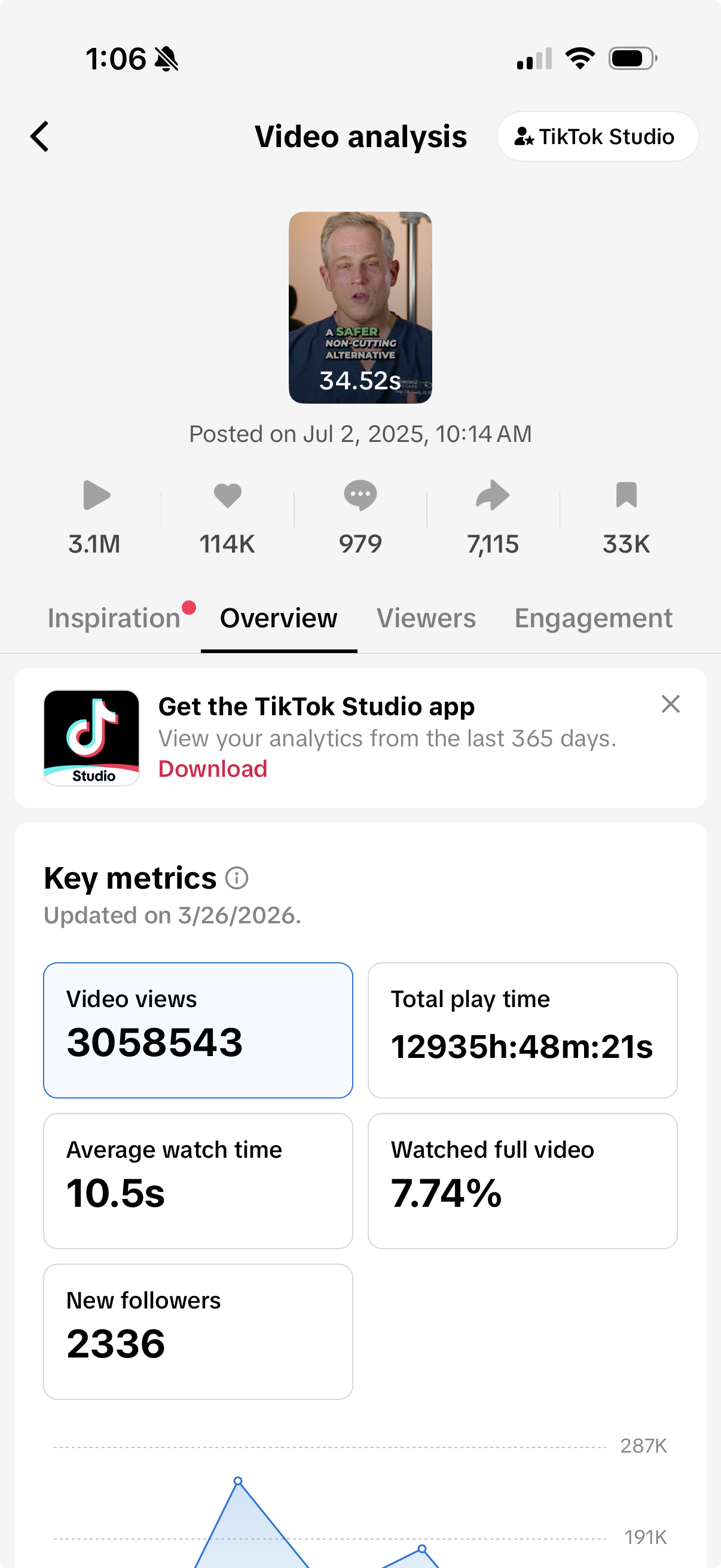
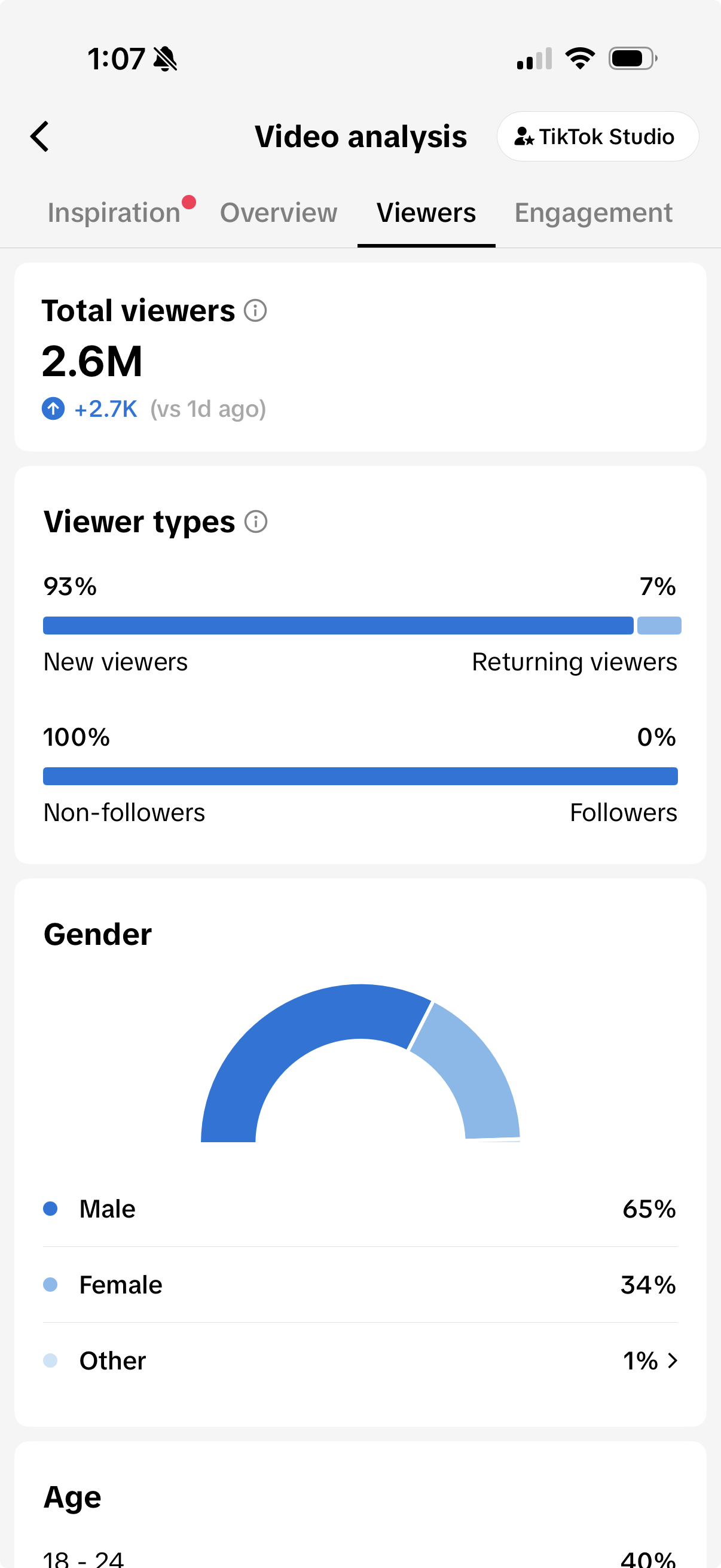
Here's where it gets interesting and a little wild.
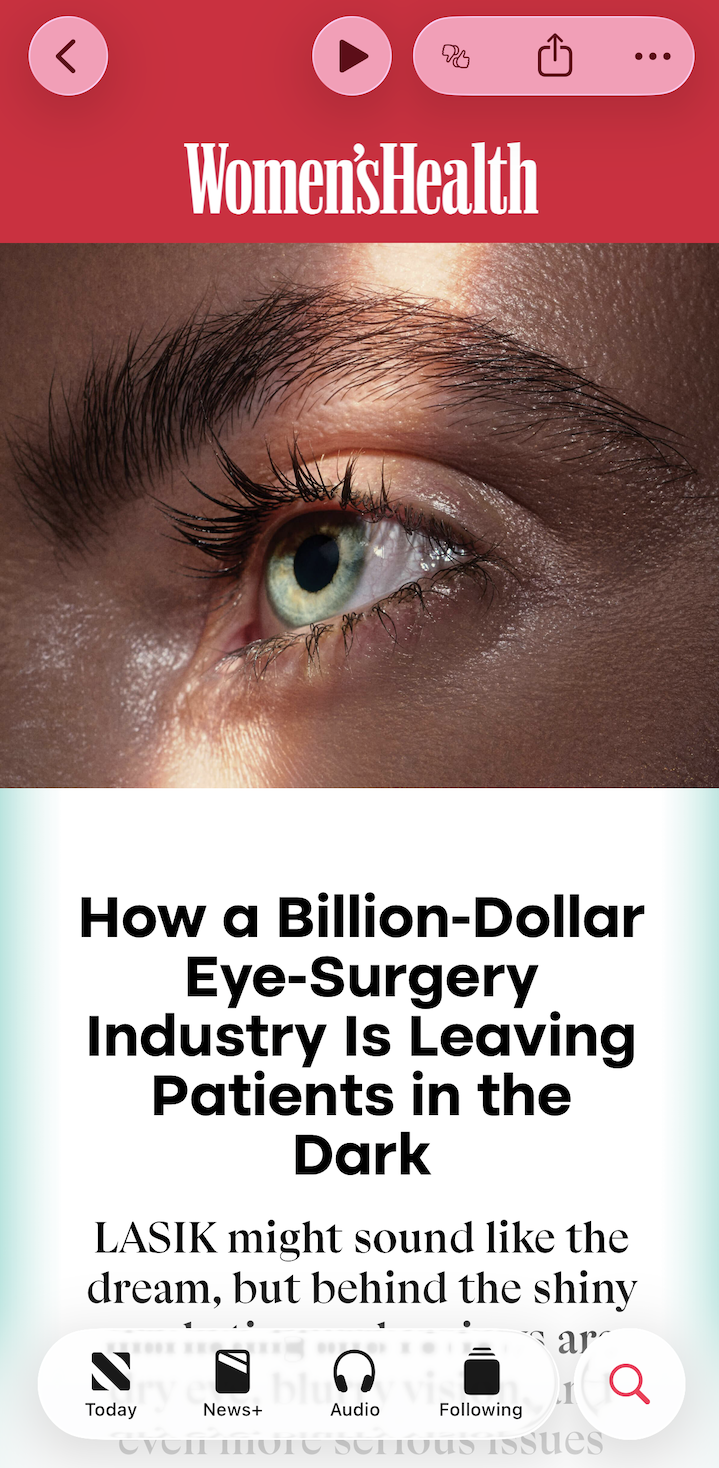
Around the same time our video was sitting quietly at just ~1,000 views, Apple pushed a headline from Women's Health Magazine to iPhone screens across the country via Apple News (which are the headlines/articles that appear by default on iPhones).
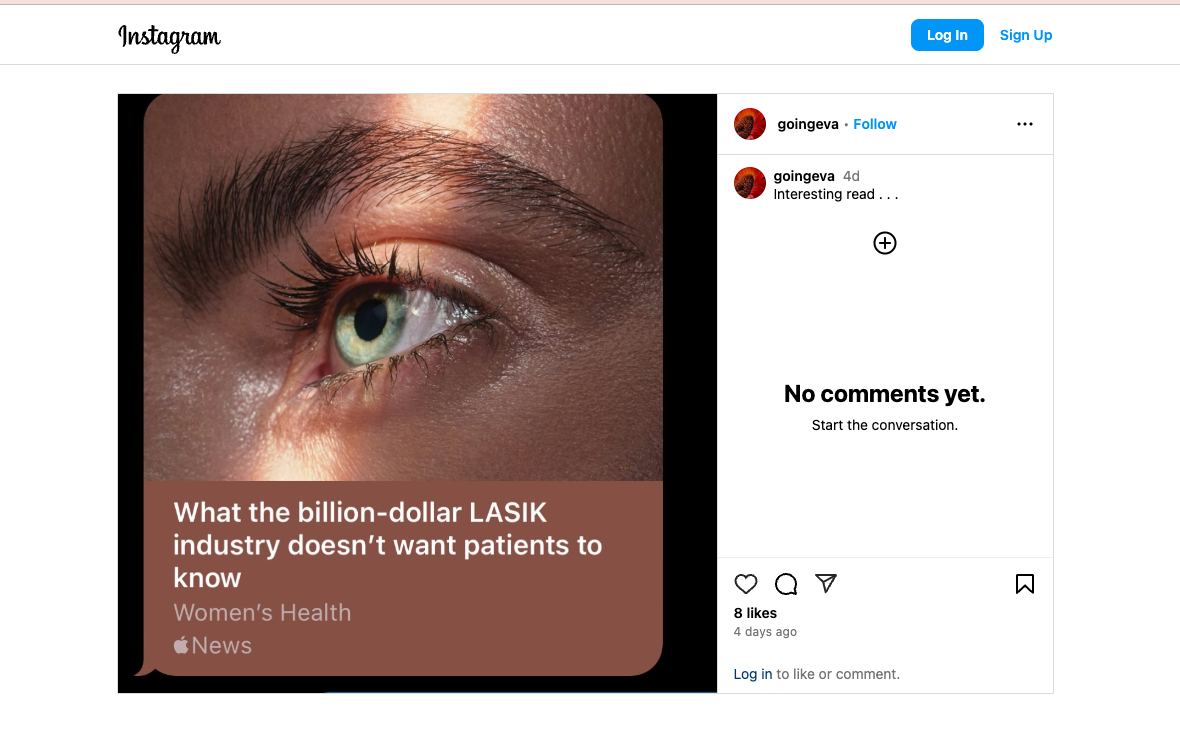
The headline: "What the billion-dollar LASIK industry doesn't want you to know."
Millions of people saw it on their phones and at least tens of thousands clicked to learn more.
Those who have Apple News subscriptions accessed a long-form feature enumerating LASIK risks. For the majority of Apple users without an Apple News subscription, they tried to locate the article elsewhere online. But – it actually hadn't yet been published on the Women's Health website (or maybe it was just gated to subscribers only).
So naturally, people did more Googling. They searched for LASIK safety, LASIK risks, LASIK alternatives – and often found this website (July 5th was our all-time daily record for organic web traffic, and the seven day period from July 5th through July 12th saw a 250% rise in organic visits)!
A massive, sudden surge of search activity – all centered on a topic we had just posted about.
TikTok saw all of this in real-time.
And this is the part that shocked and impressed me. TikTok's algorithm doesn't just monitor activity inside the TikTok app. According to a recent BBC investigation, TikTok deploys tracking pixels across a vast network of websites – sites that have nothing to do with TikTok – collecting behavioral data on people regardless of whether they have a TikTok account.
What that means, practically: when millions of people suddenly started demonstrating interest in LASIK safety-related content, TikTok immediately detected that spike in interest and surfaced content on its platform that matched it. Our video, which happened to be perfectly on-topic and recently posted, got the bump.
Pure luck! But luck made possible by a tracking infrastructure that is much more sophisticated and faster than most people realize.
Why LASIK Is Such a Flashpoint on Social Media
This didn't happen in a vacuum. As I've discussed at length on this blog, LASIK has become one of the most charged topics in the "deinfluencing" corner of social media. There is a real and growing body of firsthand accounts from patients who had bad outcomes (chronic dry eye, halos and starbursts, debilitating night vision problems). These are real complications, and the risks are real. I've written about exactly what those risks are and why they're structurally inherent to how LASIK works – specifically, the flap.
The problem is that social media doesn't do nuance particularly well. A horror story gets 10 million views. A careful explanation of risk stratification gets 1,000 views. The emotional content wins the algorithm, almost every time.
What I find notable about our video going viral is that it was the exception to that rule. Educational content (real, unsexy, clinical information about laser vision correction) can break through if the conditions are right. And in this case, the conditions were right because an enormous number of people were already primed and searching for exactly this information. The match between intent and content is what the algorithm rewarded.
That's actually a hopeful signal for those of us who are trying to use social media responsibly.
What the LASIK Industry Gets Wrong About This Moment
The surge in negative LASIK content online is often framed by LASIK industry voices as sensationalism. Fear-mongering…. anti-science… etc. I understand some of that reaction. It can be grating to be an accomplished refractive surgeon and watch as social media reduce your profession to worst-case scenarios.
But here's my honest take: the deinfluencing trend exists because there is legitimate, well-documented risk that the industry spent decades minimizing. I've written about LASIK's structural problems before and about how the industry's own marketing tactics, including bait-and-switch pricing and high-volume "LASIK Mill" models, have eroded consumer trust. The FDA's consideration of warning labels didn't emerge from nowhere.
What the industry should do (and rarely does), is acknowledge that safer alternatives exist. Advanced Surface Ablation (ASA) is a non-cutting laser correction procedure that delivers equivalent visual outcomes without creating a corneal flap. No flap means no flap complications. It's not a new or experimental technique – it's simply not as profitable to market at scale, which is why you don't hear about it from the big chains.
That's the gap we're trying to fill with our content.
What I Actually Learned About Virality
A few honest takeaways from watching this unfold in real time:
At least as a non-”creator”, virality is mostly not something you engineer. We didn't do anything special that week. We published a video we'd already pushed elsewhere, to an audience that wasn't paying attention, with no promotional strategy or spending behind it. The right content existed in the right place at the right moment, and a very sophisticated algorithm connected the dots.
Tracking is faster than you think. The time between the Apple News push and our TikTok video taking off was a matter of hours. TikTok's data infrastructure – which, as the BBC investigation details, extends across enormous swaths of the web via tracking pixels – can detect and respond to real-world behavioral shifts in near real time. Crazy stuff!
Dry content can sometimes win if the intent is there. The conventional wisdom is that educational content can't compete with emotional content on social media. Our experience suggests the algorithm is sometimes smarter than that… it doesn't just reward entertainment, it rewards relevance. When intent (people searching for LASIK information) met supply (our video), the match was enough.
The LASIK conversation is only getting louder. The public's appetite for honest information about LASIK risks is enormous and largely unmet by the industry itself. That appetite is what made our video "findable" in the first place.
The Bottom Line
We didn't go viral because we cracked the code on social media. We went viral because millions of people were searching for honest information about a shadowy industry, and we happened to have published something relevant and accurate at exactly the right time. If that's what it takes, I'll take it!
The bigger point is this: the public conversation about laser vision correction is happening with or without us. The question is whether the voices in that conversation are going to be corporate marketing departments, algorithm-optimized fear content, or actual physicians trying to give patients real information. We're firmly in the last camp.
If you're one of the people who found us through that video last summer… welcome! And if you're weighing your options for vision correction, I'd encourage you to read more about why ASA may be a safer choice than LASIK, and book a free consultation if you're in the New York City area.
The visit is free and the information is honest. And I promise the conversation will be more informative than any TikTok video — even one with 3 million views.